There are times when parenting is downright hard. It is overwhelming. Kids don’t come with a manual or a “how to” or “what to do if ______” book. Sometimes it feels a lot like trial and error, a good guess, or your best judgment, but parenting can be hard.
Can you imagine parenting with PTSD? A diagnosis that sometimes brings about loneliness, isolation, depression, enhanced feelings (maybe of making a major mistake or doing parenting all wrong), complicated with feelings of doubt and uneasiness, well…that seems bleak.
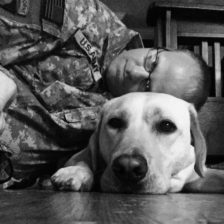
Our kids are 14 (soon-to-be-15, but we won’t get into that subject) and 10. While they have witnessed what PTSD can do on a vacation, they know there are moments when Sam needs to be alone, he needs to have some time to himself to decompress, or maybe he just wants some peace and quiet. They understand that they can’t run up behind him and surprise or sneak up on him, they know that there are certain situations in which we all just have to stick together, and they know when we are all out in public, and Memphis is with us, he is a working dog.
But sometimes as a parent it is really hard to share (or it is hard to not overshare), while learning to process your own feelings and concerns about this diagnosis. Our kids did not know the military lifestyle, they didn’t experience months, weeks, or weekends without Sam because of military service. In fact, they really enjoy visiting military instillations that Sam has been to in order to learn more about military service and culture.
Our kids are also old enough that they can help with caregiving needs. They are not in a parenting or therapist role when they do so, but they can help Sam out with a few things from time to time (like grabbing his cane if he needs it, helping him lift and move things around the house, keeping an eye on him if he’s doing too much lifting). PTSD can affect the whole family, not just one person. The “normal” in which we live might not seem super normal to others, and that’s okay. It is our normal.
We support one another, and we care for each other deeply. We listen and always try to take days one at a time. Patience is key, listening, and communicating are key, too. If the kids want to ask Sam a question about the military or his time during deployments, they know that it must be phrased carefully as not to seem intrusive, after all, they are curious, and they just want to know because they were not around him during that chapter of his life.
At times we might feel like we are hanging on by a parenting thread, regardless of a mental health diagnosis or not, because let’s be real, adulting can be hard, too. We have to remember to express our emotions in a way that everyone can work through and understand. We have to show and tell one another that we care for each other, even when it may seem like we may not want to do “normal” things (go to the store, movies, go out to dinner). We can do these things, but sometimes it is an early movie to avoid a big crowd, or it is a table in the corner where it seems no one can see us.
We talk about situations in which Sam might be uncomfortable, and we try to explain PTSD as best we can. The biggest thing we make sure the kids know is that these feelings that Sam may have from time to time are definitely not their fault, nor are they to blame for some of the feelings and behaviors. We don’t go into graphic details of deployments, but they know that sometimes fighting in a war is dangerous, and it is hard on one’s body, soul, and heart.
We often say that we do our best when we are altogether, a team. I believe that with all of my heart. If you struggle with how to talk about PTSD in the home, or why it might be hard to do things as a family, I encourage you to do some research, talk with other military families, reach out to loved ones, explain that patience and understanding is key for your family, or that your “normal” might not be the norm for everyone else. Education is so important. Opening the doors for conversation can really make a difference.

These two. They have grown so much over the years. I miss them being little toddlers, but I know they are growing up and they are destined to do great and wonderful things. This is one of my favorite pictures. When our family became official on the beach in Navarre. This might not be the family we started out with, but this family isn’t defined by last names or by blood…it is defined by love.